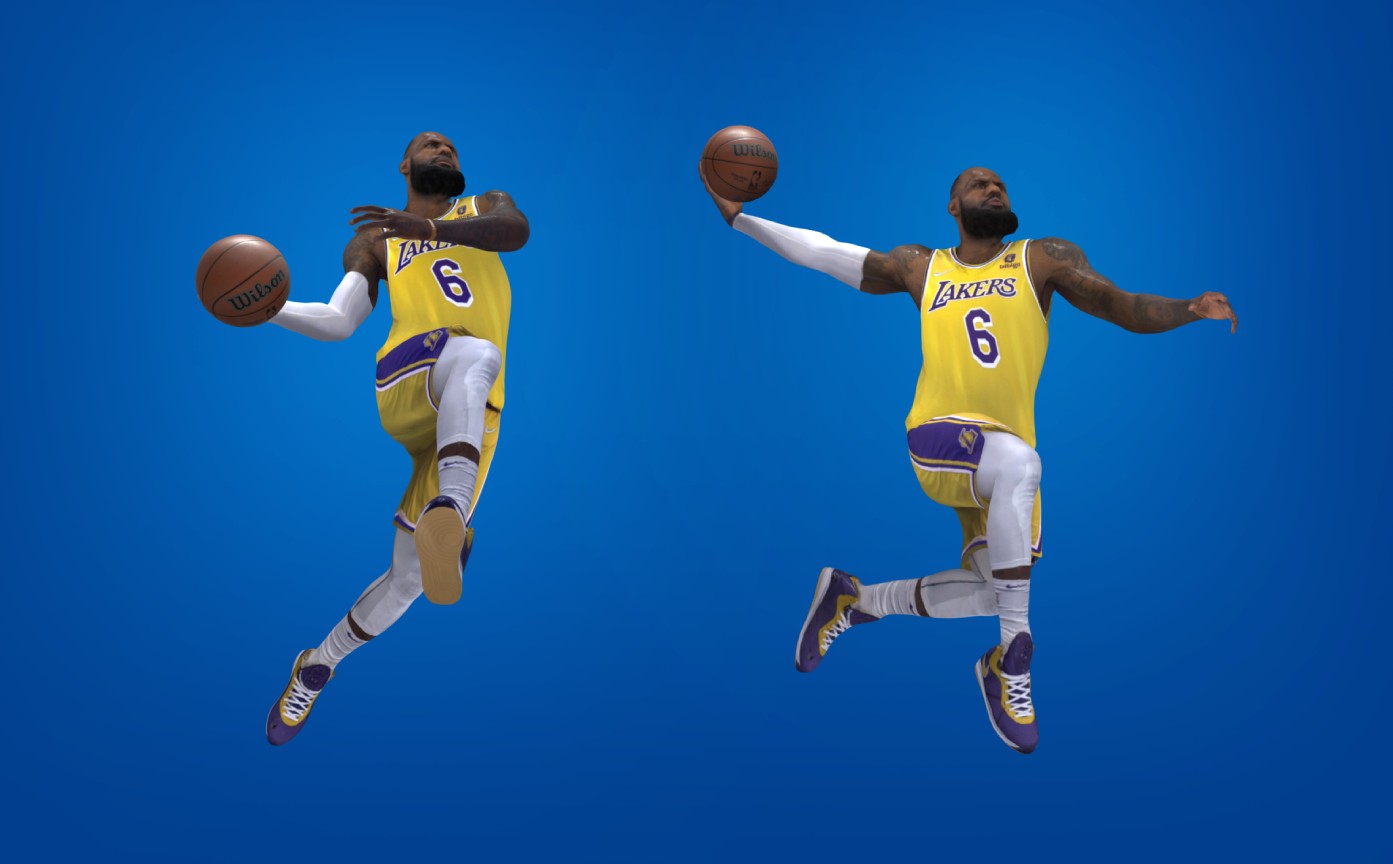
AT&T Playmaker: LeBron James Edition
Animate the move for LeBron. Then make the same performance work on scanned fans with completely different proportions.
For NBA All-Star Weekend in Cleveland, AT&T's Playmaker: LeBron James Edition let fans place recreated LeBron moments into themed AR playgrounds, including outer space, or bring them into the real world through their phone.
My work covered both sides of that idea: animating the hero performance and building the retargeting needed to carry that motion onto scanned participants.
What shipped
Updated Aug 2026: I revisited my original 2022 dunk animation and added new camera work and sound to present the performance more clearly. The character animation itself is the original production work.
I can’t show the full AR experience here, but I can show the animation and retargeting work behind it. The clips below include the hype performance I animated and examples of the retargeting setup applied to scanned participants, including the hype and walk motions across different body proportions.
What I did
I animated one of the LeBron dunk sequences from approach through landing and recovery, a hype animation, and a walk animation.
The dunk could not just be a technically correct jump. The takeoff, body arc, ball timing, finish, and landing all had to feel like the same performance. I used a ball simulation as reference for the trajectory, then animated the final ball so I could control the relationship between the hands, bounce, and landing precisely.
Then came the other half of the problem: the animation also had to work on people who were not built like LeBron.
I built the retargeting path for the dunk, hype, and walk animations so scanned participants with very different heights and proportions could use the same motion while keeping the important parts of the performance intact.
A shorter participant still needed to reach the rim. Different proportions still needed believable ground contact and a clean relationship with the ball. The retarget could not simply copy motion from one body to another and call the job finished.
I also adapted the dunk for a lunar playground. The ground and landing changed, so I adjusted the motion and its relationship to the surface instead of treating it as the same court animation dropped into a different background.
The result was a retargeting system that carried the performance from the hero athlete onto scanned fans while accounting for the body and environment it landed on.
Constraints that mattered
Sports animation gets exposed quickly. A jump can be physically plausible and still look wrong if the takeoff, ball timing, weight, or recovery does not belong to the performance.
Retargeting adds another problem because the destination body keeps changing. Height, limb length, proportions, and ground contact all change what the same animation becomes once it leaves the original rig.
The lunar playground pushed that further. Changing the ground changed the motion. Feet still needed somewhere believable to land, and the body still needed to carry the same intent even though the stage underneath it was different.
That was the most interesting part of the project for me: not just animating the move, but building it so the performance could survive everything that happened after the original animation was finished.
How we split it
This was a team production. I was responsible for one of the LeBron James dunk animations, the hype performance, a walk animation, and the retargeting work that transferred the motion onto scanned participants and adapted it for the different AR environments.
Additional animation, character assets, look development, and the public AR experience were produced by the wider team.